Charging Time Calculator
Choose your vehicle and your HIMS charger — the result sits beside you and updates instantly.
Browse all electric vehiclesYour Vehicle
🇹🇷 Made in Türkiye — TOGG85
kWh Battery
11 kW
AC Limit (Three-Phase)
180 kW
DC Peak
HIMS Charger
AC — Home / Workplace
On AC the vehicle is limited to 11 kW limit — devices that add no speed are hidden.
Do you own a 2023 early-production T10X V2 (22 kW OBC)?
DC — Fast Charging Station
HCTK-11-PS / Smart
AC 11 kW · Three-phase
Charging Range and Conditions
United Kingdom · You can enter your current tariff.
Home: Ofgem energy price cap — electricity unit rate, Direct Debit, GB average (1 Jul–30 Sep 2026, incl. 5% VAT) (2026-07-01) · official source
Public AC: Electroverse — weighted pay-as-you-go average for slow/fast public AC (March 2026) (2026-03) · secondary source — verification recommended
Public DC: IONITY Direct (no subscription) list price, United Kingdom (2026-09-12) · operator list price
TOGG T10X V2 Long Range (RWD)
HCTK-11-PS / Smart · 20% → 80%
5 h 9 min
Estimated duration · ends 18:07
52 km/h
Charging speed
+267 km
Range gained
£15
Estimated cost
51 kWh
Energy delivered
10 kW
Average power
⛽ Same 267 km with petrol: £32 — with electricity 2,2 times cheaper →
Petrol or Electric?
Same Road, Different Bill
This charge gives you 267 km the amount you'll pay for the distance:
⛽ Petrol vehicle (7 L/100 km · £1.72/L)
£32
🏠 Electricity · Home (£0.2611/kWh)
£15
Compared to petrol 2,2 times cheaper · £17 stays in your pocket
⚡ Electricity · Public DC (£0.83/kWh)
£46
Compared to petrol 0,7 times cheaper · £-13 stays in your pocket
What about at 50,000 km?
TOGG T10X V2 Long Range (RWD) with (~2-3 years of average use)
⛽ Petrol vehicle
£6,020
🏠 At home
£2,771
2,2 times cheaper
⚡ Always public DC
£8,523
0,7 times cheaper
For a TOGG driver charging at home with a HIMS charger, the money left in their pocket at 50,000 km:
~£3,249
fuel difference £3,249 · vs. petrol, at the home tariff (maintenance difference excluded)
Sources · United Kingdom
Petrol: DESNZ weekly road fuel prices — unleaded petrol (week of 21 Sep 2026) (2026-09-21) · official source · Consumption assumption 7 L/100 km.
Electricity (home): Ofgem energy price cap — electricity unit rate, Direct Debit, GB average (1 Jul–30 Sep 2026, incl. 5% VAT) (2026-07-01) · official source
Public DC: IONITY Direct (no subscription) list price, United Kingdom (2026-09-12) · operator list price · Losses included (meter at home, connector measurement at the station).
Range and cost per km are calculated from your vehicle's real-world consumption; prices may change over time.
Which HIMS device?
Comparison Across All HIMS Devices
TOGG T10X V2 Long Range (RWD) · 20% → 80%
| HIMS Device | Type | Duration | Avg. Power | Note |
|---|---|---|---|---|
| HCTK-G-3 Portable (3.7 kW) | AC | 15 h 19 min | 3 kW | |
| HCTK-7-PS Portable (7.4 kW) | AC | 7 h 39 min | 7 kW | |
| HCTK-11-PS / Smart (11 kW) | AC | 5 h 9 min | 10 kW | Selected |
| HCDC-S1-30 (DC30) (30 kW) | DC | 1 h 58 min | 26 kW | Current limit: 80 A → ≈28–30 kW |
| HCDC-S1-40 (DC40) (40 kW) | DC | 1 h 22 min | 37 kW | |
| DC60 Station (60 kW) | DC | 55 min | 56 kW | |
| DC80 Station (80 kW) | DC | 47 min | 65 kW | Current limit: 200 A → ≈70–80 kW |
| DC120 Station (120 kW) | DC | 38 min | 80 kW | Current limit: 250 A → ≈87.5–100 kW |
Click a row to calculate with that device.
HIMS Products That Fit You
Devices at the Power You Selected
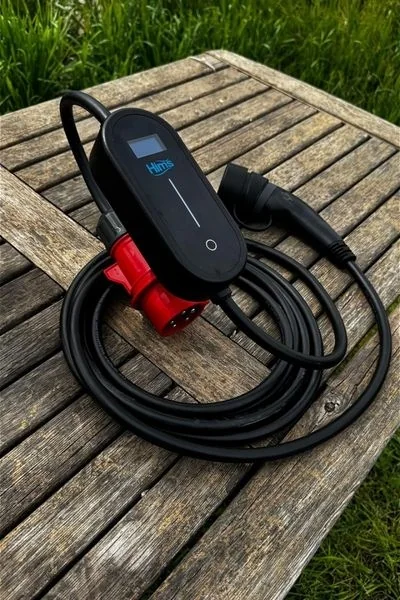
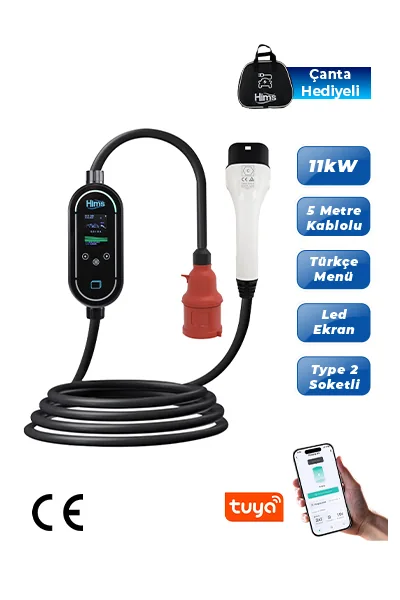
How does charging work?
What happens when electricity enters the vehicle?
The difference between AC and DC charging is where the electricity is converted. Switch between the tabs, then see who limits the power for your selected vehicle.
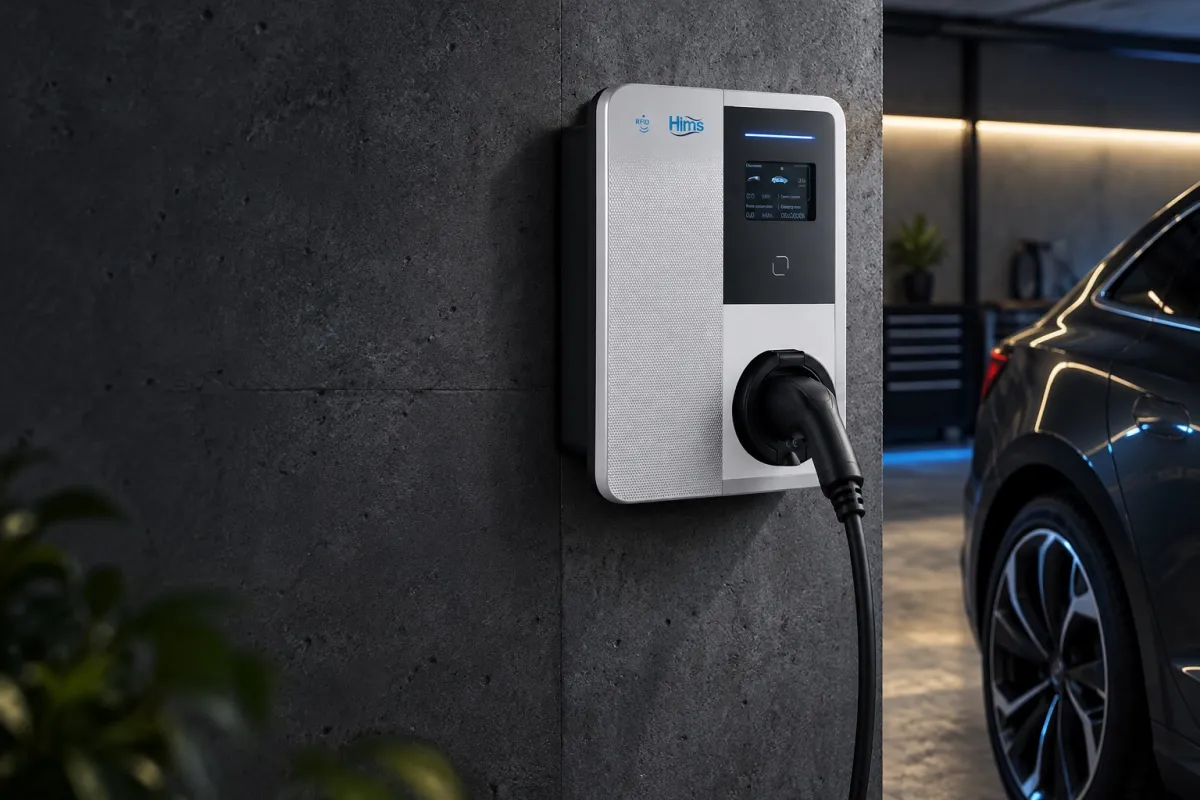
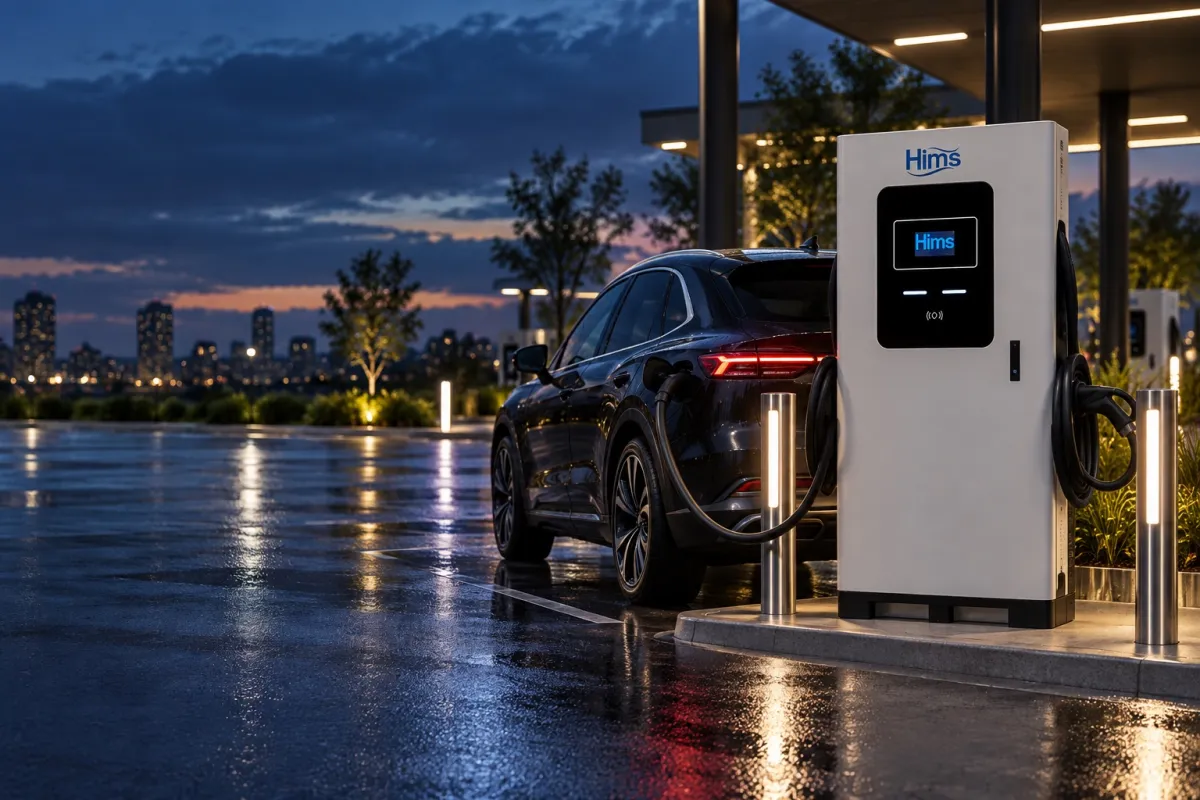
AC charging
AC → DC conversion in the vehicle
Source
Power grid
Charger
HIMS AC charging device
Inside the vehicle
Onboard charger (OBC): AC → DC
Final stop
Vehicle battery
On AC charging, speed is mostly set by the onboard charger (OBC) inside the vehicle; no matter how powerful the device is, the vehicle won't exceed its own limit.
Who limits the power for your selected vehicle?
TOGG T10X V2 Long Range (RWD)
Theoretical upper limit
11 kW
The device and vehicle limits are equal: 11 kW.
This is a schematic illustration; actual power can vary with the electrical installation, fuses, temperature and the vehicle's charge management.
Transparency
How Do We Calculate?
⚡ Bottleneck and Phase Rule (AC)
Effective power is set by the device limit and the vehicle's on-board AC charging limit — whichever is lower — A 22 kW device does not speed up a vehicle that only accepts 11 kW. Vehicles that only accept single-phase AC charging can use just one phase of a three-phase device (1/3 of the power); our calculations and warnings take this into account. AC conversion efficiency is taken as ~90%.
📈 Real Charging Curve (DC)
DC power is not constant; it drops as the battery fills. We calibrate each vehicle's curve to the published real 10%→80% charging time calibrates it, then we add up your selected range step by step along this curve. The chart shows why the time above 80% stretches out disproportionately.
🌡️ Temperature Effect
Cold batteries noticeably slow DC charging — the temperature slider doesn't just show a warning, changes the calculation itself. The effect on AC charging is small and is modelled that way.
💰 Honest Cost
At home, the meter measures the grid side: the billed energy is ~10% more than what reaches the battery. A public DC station bills from the connector (~7% loss share). We calculate the cost based on the kWh you will actually pay for.
Vehicle data is compiled from official manufacturer documentation and WLTP homologation; the calculation engine passes automated guard tests on every release.
Calculations are based on vehicle manufacturer data and real-world charging measurements (ev-database.org); AC charging uses ~90% efficiency, while DC fast charging uses a vehicle-specific calibrated charging curve (taper) model. Actual duration may vary depending on battery temperature, battery age, pre-conditioning and station occupancy ±%10–30 may vary. On DC charging, going above 80% disproportionately extends the time. Cost is estimated based on the tariff you enter.